
Trenchless Sewer Repair in Westminster, CO: Is It Right for Your Home?
Proper water heater maintenance in Westminster, CO can add years to your unit's life — and save you from a cold-water surprise on a winter morning. This page covers how to flush your tank, what sediment buildup is doing to your energy bill, and how Westminster's hard water makes maintenance more urgent than in most other cities. We'll also walk you through exactly when a maintenance issue becomes a repair call.
Think your water heater needs more than maintenance? water heater repair in Westminster
Westminster's water is some of the hardest in the Denver metro. Hard water is one of the fastest ways to destroy a water heater from the inside out — and most homeowners don't know it's happening until the damage is done.
This guide covers everything you need to know about water heater maintenance in Westminster, CO. From how often to flush your tank to what sediment buildup is actually doing to your water bill, we'll give you the full picture.
You'll learn the signs your heater needs attention, how hard water in this area shortens tank life, and when a maintenance issue becomes a repair call. In our work across Westminster homes, we consistently find sediment buildup that homeowners didn't know was there — even in units only 4–5 years old.
How Often Should You Flush a Water Heater in Westminster, CO?
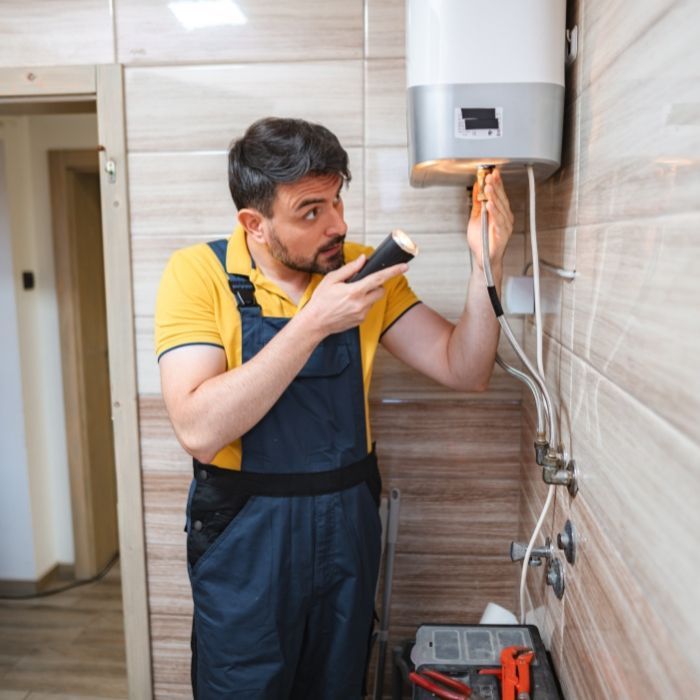
Most water heaters should be flushed once a year. In Westminster, CO — where water hardness levels are elevated — flushing every 6 to 12 months is a better target. Sediment from minerals like calcium and magnesium collects at the bottom of your tank. Over time, this makes your heater work harder, raises your energy bill, and shortens the unit's lifespan. A flush takes about 30–60 minutes and can add years to your water heater's life.
Already seeing signs of trouble?
Schedule water heater repair in Westminster
Why Water Heater Maintenance Matters More in Westminster, CO
Westminster sits in a hard water zone. According to Denver Water's annual water quality report, the Denver metro area consistently registers elevated hardness levels — often in the range of 8 to 15 grains per gallon depending on the source. That's considered hard to very hard water.
When hard water heats up, calcium and magnesium minerals separate from the water and sink to the bottom of your tank. That layer of sediment acts like insulation between the burner and the water. Your heater has to work harder and run longer to reach temperature. The U.S. Department of Energy notes that sediment buildup can measurably reduce water heater efficiency — meaning higher bills for the same amount of hot water.
Westminster homeowners feel this more than people in softer-water cities because the mineral load coming into the tank is higher from the start. The same issue affects tankless units, which develop scale buildup in the heat exchanger if not descaled regularly.
In Westminster homes we service, we often pull sediment layers that homeowners didn't know were there — even in tanks that are only 4–5 years old. That's a direct result of this area's mineral content.
Water Hardness vs. Recommended Flush Frequency
| Water Hardness Level | Recommended Flush Frequency |
|---|---|
| Soft (0–3 gpg) | Every 12–18 months |
| Moderately Hard (4–7 gpg) | Every 12 months |
| Hard (8–12 gpg) | Every 6–12 months |
| Very Hard (12+ gpg) | Every 6 months |
Signs Your Water Heater Needs to Be Flushed (Or Already Has a Problem)
Some symptoms show up gradually. Others are hard to miss. Here's what to look for:
Rumbling or popping sounds — Sediment trapped under the heating element cracks and pops as it heats up. This is one of the most common signs of buildup.
Slow or inconsistent hot water — If hot water takes longer than it used to, or the temperature fluctuates, sediment may be affecting heating performance.
Rusty or discolored water from the hot tap — Rust-colored water from the hot side only usually points to corrosion inside the tank.
Rising energy bills with no change in usage — The Department of Energy links sediment buildup directly to reduced efficiency and higher operating costs.
Moisture or pooling at the base of the tank — Even a small amount of standing water near the unit warrants a closer look.
Quick visual check: Look at the area around the pressure relief valve and the base of the tank. Any signs of moisture, mineral staining, or rust are worth noting before you call.
How to Flush a Water Heater Step by Step
What you'll need:
- Garden hose
- Flathead screwdriver
- Bucket (optional, for testing the drain valve)
Steps:
- Turn off the power or gas. Switch your electric heater to "off" at the breaker. For gas units, set the thermostat to "pilot."
- Shut off the cold water supply. The cold water inlet valve is typically at the top of the tank.
- Let the water cool. Wait at least an hour. Water inside the tank can be hot enough to cause serious burns.
- Connect a garden hose to the drain valve. The drain valve is near the bottom of the tank. Run the hose to a floor drain or outside.
- Open a hot water faucet somewhere in the house. This prevents a vacuum from forming and lets the tank drain properly.
- Open the drain valve. Water will begin flowing out. It may look brown or discolored at first — that's the sediment.
- Flush until the water runs clear. Briefly turn the cold water supply back on to stir up remaining sediment, then drain again.
- Close the drain valve, remove the hose, and refill the tank. Keep the hot water faucet open until water flows steadily — this means air has cleared the lines.
- Restore power or gas once the tank is full.
Safety notes: Never drain a tank that hasn't cooled. Be careful around the pressure relief valve — it releases hot water and steam if triggered. If rust-colored water doesn't clear after several minutes of flushing, stop and call a plumber.
One thing we see often — homeowners open the drain valve and it won't fully close again afterward. Older valves corrode and fail to seat properly once disturbed. If that happens, stop and call us rather than leaving it dripping.
Not comfortable doing this yourself? Call our Westminster plumbers
How Often Should You Flush Your Water Heater in Colorado?
The standard industry recommendation from manufacturers like Rheem, Bradford White, and A.O. Smith is once per year. In Westminster and across Colorado's Front Range, that baseline doesn't account for local water hardness — so we recommend adjusting based on your household situation.
Recommended Schedule by Household Profile
| Household Profile | Recommended Flush Frequency |
|---|---|
| New tank, water softener installed | Every 12 months |
| No softener, 1–2 person household | Every 12 months |
| No softener, 3–4 person household | Every 6–12 months |
| No softener, 4+ people or older tank | Every 6 months |
| Tank that has never been flushed | Flush now, then reassess |
If you've never flushed your water heater — do it now, regardless of age. You may find the tank is in worse shape than you expected, and that's useful to know sooner rather than later.
For tankless water heaters, the process is different. Tankless units need annual descaling — a vinegar or descaler solution is circulated through the heat exchanger. The flushing steps above apply to traditional storage tanks only.
When Water Heater Maintenance Becomes a Repair Call
Flushing handles sediment. It doesn't fix everything. Here's where the line is.
What's maintenance:
- Flushing sediment from a working tank
- Checking the anode rod (and replacing it if worn)
- Testing the pressure relief valve
- Adjusting the thermostat setting
What's a repair:
- Leaking tank or drain valve that won't close
- Corroded or failed anode rod (accelerates tank corrosion if left alone)
- Pilot light that won't stay lit on a gas unit
- No hot water despite power and gas being on
- Active rust in the discharge water after flushing
DIY vs. Call a Pro
| Situation | Right Move |
|---|---|
| Routine annual flush, tank under 10 years old | DIY is fine |
| Drain valve won't close after flushing | Call a plumber |
| Discolored water clears after flush | Monitor; DIY maintenance ongoing |
| Rusty water doesn't clear after flush | Call a plumber |
| Tank is 10–12+ years old | Professional inspection recommended |
| Active leak at the base of the tank | Call a plumber immediately |
| Pilot light issues or gas smell | Call a plumber — do not DIY |
According to Angi's cost data, the average water heater repair runs significantly less than a full replacement. Catching a failing anode rod or a corroded fitting early almost always costs less than waiting until the tank fails.
Our team serves Westminster, Thornton, Broomfield, Arvada, and surrounding communities across Adams County and Jefferson County. A professional water heater inspection covers the tank, connections, anode rod, pressure relief valve, and gas or electrical components — so you know exactly what you're working with.
Evidence Pack
| Claim | Source |
|---|---|
| Westminster/Denver area water hardness levels | Denver Water Annual Water Quality Report (denverwater.org) |
| Hard water reduces water heater efficiency | U.S. Department of Energy / ENERGY STAR (energy.gov) |
| Annual flush recommendation | Rheem, Bradford White, A.O. Smith owner manuals |
| Sediment buildup raises energy bills | DOE energy.gov/energysaver |
| Average water heater repair vs. replacement costs | Angi cost guides (angi.com) |
| Water heater lifespan 8-12 years | InterNACHI / U.S. Department of Energy |
| Pilot light issues or gas smell | Call a plumber / do not DIY |