How Do You Know When You Need to Call a Plumber in Westminster, CO?
Introduction
A small drip under the sink doesn't look like much. But that little drip can turn into a big repair bill fast. So how do you know when you need to call a plumber in Westminster CO, and when it's safe to wait?
We're Westminster Plumbing, a family-owned company with certified Master Plumbers on our crew. We're fully licensed and insured, and we've helped homeowners across Westminster and the Front Range tell the difference between a minor fix and a real problem. This guide walks you through the warning signs, a quick DIY-or-call test, and the moments when you should pick up the phone right now.
Common Plumbing Warning Signs in Westminster Homes
You need to call a plumber in Westminster if you notice water that won't shut off, drains backing up in more than one fixture, no hot water, low pressure throughout the house, gurgling sounds, or water stains on your walls or ceiling. These signs point to problems that get worse, not better, on their own.
Most plumbing trouble starts small. A faucet drips a little. A drain empties a little slower than usual. You hear a faint bang in the wall when you turn off the shower. None of these feel urgent on day one.
But they add up. Here's what to watch for:
- Dripping faucets that won't stop, even after tightening
- Sinks or tubs that drain slower than they used to
- Banging, whistling, or rattling noises in the pipes
- Water stains or damp spots on walls, ceilings, or floors
- A musty smell near sinks, tubs, or the water heater
Any one of these on its own might not be an emergency. So don't panic over a single drip. But when two or three show up together, that's usually your pipes telling you something bigger is going on.
For fast, reliable help, contact a trusted plumber in Westminster CO today.
Now that you know the general warning signs, let's zoom in on one of the most common complaints: water pressure.
Low Water Pressure — Is It Serious?
Low water pressure can mean almost nothing. Or it can mean a hidden leak is draining your system. The trick is figuring out which one you're dealing with.
Start by asking where the drop is happening. If only one faucet is weak, the fixture itself is probably the culprit. If every tap in the house feels weak, the problem is bigger than one sink.
| Type of Pressure Drop | What It Usually Means |
|---|---|
| One faucet or showerhead is weak | Clogged aerator or fixture buildup - often a quick fix |
| Pressure dropped suddenly, whole house | Possible hidden leak or main line issue - needs inspection |
| Pressure has faded slowly over months | Mineral buildup in pipes, common with Westminster's hard water |
| Pressure changes when other water runs | Normal, unless the drop is severe |
Westminster's water runs hard, and hard water leaves mineral deposits inside pipes over time. That buildup narrows the pipe and chips away at your pressure year after year.
Here's a simple check you can do yourself. Unscrew the aerator on the weak faucet and look for white, crusty buildup. If you find it, clean it out and see if pressure improves. If the whole house is still weak, that's your sign to call.
Water Heater Problems That Need Professional Help
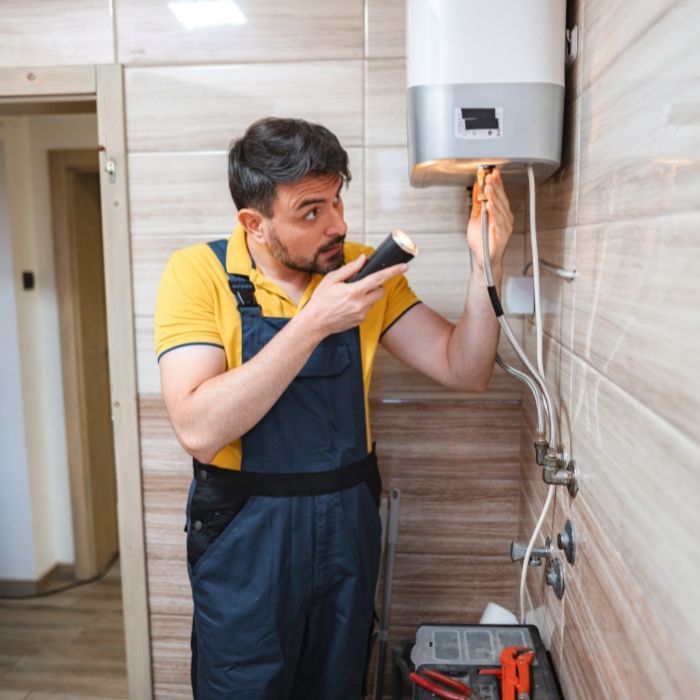
Call a plumber if your water heater gives you no hot water, rusty water, strange popping sounds, or a puddle on the floor. These are signs the tank itself is failing, not just acting up.
Your water heater works quietly for years. Then one day it doesn't. Here's what tells you it's more than a fluke:
- No hot water at all, even after waiting
- Rusty or discolored water coming from the tap
- Popping or rumbling sounds from inside the tank
- Water pooling on the floor around the unit
- The unit is older and has never been serviced
Age matters here. Older water heaters are more likely to fail without warning, and a tank that's rusting from the inside can leak or burst. So if your unit is getting up there in years and showing any of these signs, don't wait for it to fail completely.
Ready for a second opinion on your water heater? Reach out to your
Westminster CO plumber before a small issue turns into a flood.
Drain and Sewer Warning Signs
If your water heater is acting up, that's one kind of trouble. Drains and sewer lines send their own set of warning signs, and they're just as important to catch early.
A single slow drain is usually just a clog. But when several drains slow down at once, or when your toilet gurgles after you run the washing machine, that points to something further down the line.
- More than one drain running slow at the same time
- Gurgling sounds from toilets or sinks when other fixtures drain
- Sewage smells indoors or out in the yard
- Standing water or soggy patches in the yard, especially near the sewer line
- A toilet that bubbles or backs up on its own
One thing worth knowing: chemical drain cleaners can make sewer line problems worse. They can eat away at older pipes, and they don't fix a clog that's actually further down the line. If a plunger and hot water don't clear the blockage, it's time to call rather than reach for another bottle of drain cleaner.
DIY Fix or Call a Pro? A Quick Decision Guide
Not sure if you should grab a wrench or the phone? This quick guide will help.
Some plumbing problems are safe to handle yourself. Others can turn a $150 repair into a $1,500 one if you wait, or make things worse if you try to fix them without the right tools.
| Safe to Try Yourself | Call a Pro Instead |
|---|---|
| Plunging a single slow toilet | Water actively leaking or flooding |
| Tightening a loose faucet handle | Any smell of gas near the water heater |
| Cleaning a faucet aerator | No water or no hot water anywhere in the house |
| Resetting a tripped garbage disposal | Working on gas lines or the main shutoff valve |
| Using a drain snake on one slow sink | Sewage backing up into the house |
Gas lines, main water shutoffs, and water heaters aren't good places to guess. A mistake there can cost far more than a service call, and in some cases it can be dangerous.
And here's the real math: waiting almost always costs more than calling. A slow drip today can mean warped flooring or mold next month. So if you're on the fence, lean toward calling. It's cheaper in the long run, and it's safer too.
When to Call a Westminster Plumber Right Away
Call a plumber immediately if you have an active leak, no water anywhere in the house, a sewage backup, or a gas smell near your water heater. These situations don't get better while you wait.
Some plumbing problems can sit until tomorrow. Others can't wait an hour. Here's your checklist for the second kind:
- Any active leak or flooding you can't stop
- No water, or no hot water, throughout the whole house
- Sewage backing up into a sink, tub, or floor drain
- A gas smell anywhere near your water heater or gas lines
- A burst pipe
If you're checking off any of these boxes right now, stop reading and pick up the phone.
Call a plumber in Westminster CO at (478) 780-3030, and we'll get someone out to you fast. Westminster Plumbing is available for emergency calls, and our certified Master Plumbers handle everything from a burst pipe to a full sewer line failure.
Frequently Asked Questions
How do you know when you need to call a plumber in Westminster?
You need to call a plumber when you see an active leak, no hot water, low pressure throughout the house, sewage smells, or gurgling drains. These signs mean the problem is beyond a simple fix and is likely to get worse without a professional.
You need to call a plumber when you see an active leak, no hot water, low pressure throughout the house, sewage smells, or gurgling drains. These signs mean the problem is beyond a simple fix and is likely to get worse without a professional.
Signs you need a plumber include dripping faucets that won't stop, slow drains in multiple fixtures, banging pipes, water stains on walls or ceilings, and rusty or no hot water. Any of these on their own is worth watching, and two or more together mean it's time to call.
When should you call an emergency plumber?
You should call an emergency plumber the moment you have an active leak, a burst pipe, a gas smell, no water household-wide, or a sewage backup. Waiting on any of these can lead to serious property damage or a safety risk.
Can low water pressure fix itself?
Low water pressure rarely fixes itself, especially in homes with hard water like Westminster's. If cleaning the faucet aerator doesn't help and the whole house is affected, the cause is likely deeper in the pipes and needs a professional look.
Is it safe to use chemical drain cleaner on a clogged pipe?
Chemical drain cleaner is not the safest choice, especially in older pipes, because it can corrode pipe walls over time. A plunger, hot water, or a drain snake is a safer first try before calling in a pro.
