
10 Early Warning Signs of Plumbing Problems Every Homeowner Should Know
Catching the early warning signs of plumbing problems can save Westminster homeowners thousands in repairs. This guide covers the most common red flags — unusual sounds, slow drains, water stains, pressure drops, and more. Westminster's hard water and older neighborhoods make these signs worth knowing before a small issue becomes a large one.
Think you have a problem?
Talk to a local plumber in Westminster, CO today.
Introduction
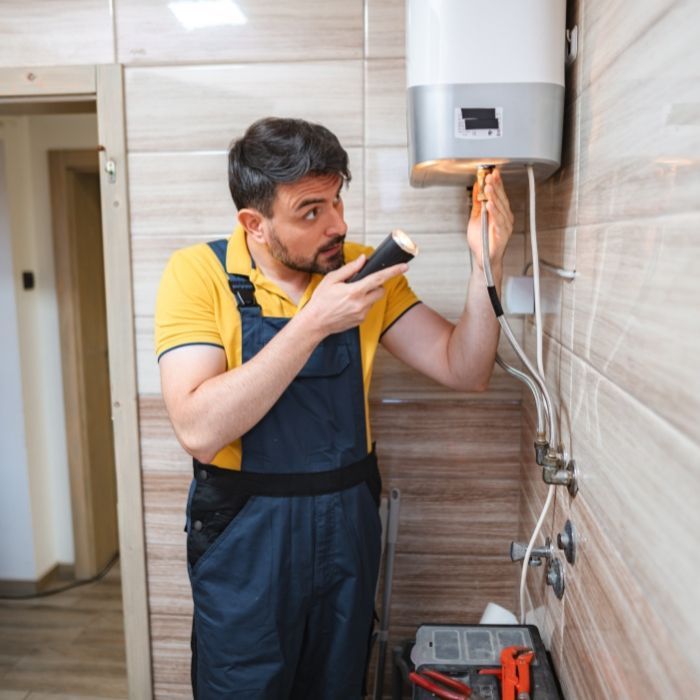
You notice your water bill jumped last month. The bathroom sink drains a little slower than usual. And there's a faint musty smell near the wall behind the toilet. Separately, these seem minor. Together, they're your home trying to tell you something.
This guide covers the early warning signs of plumbing problems that Westminster, CO homeowners most commonly miss — and what each one likely means. You'll learn which signs are urgent, which ones you can watch for a few days, and what to do when you spot more than one at the same time. Each section ends with a clear next step.
What Are the Early Warning Signs of Plumbing Problems?
The most common early warning signs of plumbing problems include:
- Slow or gurgling drains — often the first sign of a developing clog or venting issue
- Low water pressure — can point to a leak, pipe corrosion, or a supply issue
- Unusual sounds — banging, hissing, or dripping behind walls
- Discolored water — rust or brown tints suggest pipe corrosion
- Unexplained spike in your water bill — a strong indicator of a hidden leak
- Water stains or soft spots — on ceilings or walls near pipes
- Musty or sulfur-like odors — linked to mold growth or sewer gas
Spotting two or more of these together means it's time to call a plumber.
Seeing one of these signs in your home?
Schedule a plumbing inspection in Westminster, CO.
Slow Drains and Gurgling Sounds
A slow drain is usually the first thing homeowners notice. It's easy to dismiss — but it's also one of the clearest early warning signs of plumbing problems developing below the surface.
What a slow drain actually means
A single slow drain usually points to a partial clog in that fixture's drain line. Hair, soap buildup, and grease are common culprits. Westminster's water runs at approximately 123 ppm according to water treatment data — a moderately hard level — which means mineral deposits can accelerate buildup inside pipes over time.
Gurgling is different from just slow
Gurgling is the sound of air being pulled through a partial blockage. When you hear it, the drain is working against a restriction. That's the pipe "breathing" through a developing clog.
One slow drain vs. multiple slow drains
| Situation | What It Likely Means |
|---|---|
| One slow drain | Localized clog - DIY or single service call |
| Multiple slow drains at once | Main line issue - call a plumber now |
| Gurgling in a drain you're not using | Venting problem or main line blockage |
| Toilet bubbles when you run the sink | Sewer line backup starting |
DIY vs. call threshold
A single slow kitchen or bathroom drain that clears with a plunger or enzyme cleaner is a DIY situation. If the drain stays slow after two attempts, or if more than one fixture is affected, it's time to call. Waiting on a main line warning gives a partial clog time to become a full blockage — or worse, a sewage backup.
Low Water Pressure
Low water pressure can be frustrating or it can be a sign of something serious. The key is figuring out which one you're dealing with — and that starts with where in the house the pressure has dropped.
Three main causes
- Localized (one fixture): Usually a clogged aerator or faulty cartridge. Unscrew the faucet aerator and rinse it. If pressure returns, you found it.
- Whole-house: Points to a failing pressure regulator, a partially closed main shutoff valve, or a supply issue from the street.
- Leak-related: A hidden pipe leak can bleed pressure out of your entire system without showing visible water.
One area vs. everywhere in the house
If pressure is low only in one bathroom, start at the fixture. If every faucet and showerhead in the house has dropped, the issue is upstream — either at your pressure regulator or in the supply line.
Older Westminster homes and pipe corrosion
Homes built before the 1970s may have galvanized steel supply lines. Galvanized pipe was the residential standard from the 1920s through the 1960s and was largely phased out by the early 1970s in favor of copper. Galvanized pipe corrodes from the inside out over decades — the rust narrows the pipe, and flow slows gradually over years. Homeowners often don't notice until pressure has dropped noticeably. If your home predates the 1970s and you've seen gradual pressure loss, corroded galvanized pipes are worth having inspected.
Homes built between 1975 and 1996 face a different concern: polybutylene pipe, a gray plastic material that was widely used during that era and is known to become brittle and leak-prone over time. If you're unsure what type of pipe your home has, a plumber can identify it quickly during an inspection.
3 quick checks before calling a plumber for low pressure:
- Check that the main shutoff valve near your water meter is fully open
- Unscrew the aerator on the affected faucet and look for mineral buildup
- Check your water pressure regulator — it's usually near where the main line enters the home; a healthy reading is 40–60 psi
In our experience servicing Westminster homes, pressure drops in neighborhoods with older housing stock often trace back to corroded galvanized supply lines or a pressure regulator that's past its service life. Both are jobs for a licensed plumber.
Not sure what you're dealing with?
Call a Westminster plumber and we'll help you figure it out.
Discolored Water or Strange Smells
These are the signs that alarm homeowners the most — and rightfully so. Discolored water and unusual odors are your home's way of flagging something you can't see.
| Symptom | Likely Cause | Urgency |
|---|---|---|
| Rust-brown water from hot tap only | Water heater corrosion or failing anode rod | Moderate - schedule soon |
| Rust-brown water from all taps | Corroded supply pipes or main line disturbance | High - call within 24-48 hrs |
| Cloudy or white water that clears quickly | Air in the line - usually harmless | Low - monitor |
| Brown water after city work nearby | Temporary sediment disturbance | Low - run cold tap 2 minutes |
Sulfur or rotten egg smell
A sulfur smell — like rotten eggs — usually means one of three things: a dry drain trap allowing sewer gas into the home, a deteriorating water heater anode rod, or a sewer line issue. Sewer gas is primarily hydrogen sulfide, which according to the CDC/ATSDR can cause headaches, nausea, and eye irritation at low concentrations and poses serious health risks at higher levels. If you smell it: ventilate the space immediately, don't light any flames, and call a plumber the same day.
Musty smell near a wall
A musty, earthy smell near a wall or under a cabinet often signals slow moisture — either a pinhole leak inside the wall or a dripping connection behind a fixture. The difference between that and condensation: condensation tends to be seasonal and clears up. A musty smell that stays regardless of weather is a leak until proven otherwise.
A Westminster homeowner once called us about a persistent musty smell in the hallway near their bathroom. What looked like a minor drip behind the toilet had been slowly saturating the drywall for months. By the time we opened the wall, mold had already established. The leak itself was a minor fix — the remediation was not.
Unexplained Water Bill Increases
Your water bill is one of the most reliable early warning systems in your home. When it spikes with no change in your habits, water is going somewhere it shouldn't.
What's normal?
According to the EPA, the average American uses around 82 gallons of water per day. A family of four runs about 10,000 gallons in a 30-day billing period. If your bill has jumped 10–20% with no change in household behavior, treat it as a leak until a plumber tells you otherwise.
Silent toilet leaks — the most common hidden waster
A running toilet can waste around 200 gallons per day, according to EPA WaterSense data. Many toilet leaks are silent — the flapper valve fails slowly and water trickles into the bowl without any audible running. Test yours with a dye tab or a few drops of food coloring in the tank. Wait 15 minutes without flushing. If color appears in the bowl, the flapper is leaking.
Outdoor and irrigation line leaks
Westminster's semi-arid climate means most homeowners run irrigation systems from spring through fall. A crack in an irrigation line or a faulty valve can run underground all season without any visible sign on the surface. If your bill spikes in spring after you turn the system back on, check each zone for soggy patches or unusually green areas — both are signs of a line leak.
How we investigate an unexplained bill
When a Westminster homeowner calls us about a bill spike, the first thing we check is the water meter test: turn off every fixture and appliance in the house, then watch the meter for 15 minutes. If the dial moves, there's an active leak somewhere in the system. From there, we work zone by zone — irrigation, toilets, water heater connections, and supply lines — until we find it.
Quick at-home leak check before you call:
- Turn off all fixtures and appliances that use water
- Locate your water meter (usually near the front of the property)
- Write down the reading and wait 15 minutes without using any water
- Check again — any movement means an active leak
- If the meter moved, call a plumber
Water Stains, Soft Spots, and Ceiling Damage
Visible water damage is usually what sends homeowners to their phones to search for a plumber. By the time you can see it, the water has already been there a while.
Active leak vs. old and dry — how to tell
Press the center of the stain gently with your finger. A stain that feels soft, spongy, or gives slightly is still active or recently wet. A stain that feels firm and the paint or drywall is intact is likely old and dried. Old stains still need investigation — the source may have stopped, or it may be intermittent.
Soft spots in drywall or flooring
Soft or spongy drywall near a plumbing wall, or flooring that flexes near a bathroom or kitchen, means water has been present long enough to saturate the material. This is more serious than it looks — saturated drywall and subfloor are ideal conditions for mold and structural weakening.
Water stains are rarely directly above the source
Water travels before it drips. A stain on a ceiling two feet from the bathroom above it doesn't mean the leak is where the stain is — it means the water tracked along a joist or pipe before it collected and came through. Always have the entire path investigated, not just the visible damage.
The mold timeline
According to the EPA, wet or damp materials that aren't dried within 24–48 hours can allow mold to begin growing. A slow, undetected drip behind a wall doesn't dry out — it keeps the material wet indefinitely. By the time you see a stain, mold may already be present behind the surface.
What stain color can tell you
- Yellow or light tan ring — older, dried stain; source may be resolved or intermittent
- Brown, dark ring with soft center — active or recent moisture; high urgency
- Dark with visible fuzzy texture — mold present; call a plumber and consider remediation
Waiting to see if a stain gets worse is the wrong approach. Water damage compounds quickly, and the cost to repair grows with every week the source isn't fixed.
What To Do When You Spot These Warning Signs in Westminster, CO
Now that you know what to look for, here's how to decide what to do next.
| Situation | Action |
|---|---|
| One sign, mild, recent | Monitor for 24-48 hours; attempt DIY if safe |
| One sign that's persisting or worsening | Call and schedule a non-emergency inspection |
| Two or more signs at the same time | Call a plumber today |
| Sulfur smell, discolored water, or visible mold | Call now - don't wait |
| Active water from ceiling, walls, or floor | Shut off the main water supply and call immediately |
What a plumbing inspection looks like
When you call Westminster Plumbing, we start with a walkthrough of the areas you've noticed symptoms in. We check water pressure, run the fixtures, inspect visible connections, and use diagnostic tools where needed — like a sewer camera for line issues or leak detection equipment for hidden pipe leaks. Most inspections take one to two hours. You'll get a clear explanation of what we found and what the options are before any work begins.
Westminster-specific plumbing context
Westminster homeowners deal with a few conditions that make these warning signs worth taking seriously:
- Hard water — at up to 123 ppm, Westminster's water accelerates mineral buildup in pipes and water heaters
- Freeze-thaw cycles — Colorado winters can stress supply lines, especially in exterior walls and crawl spaces
- Housing age — parts of Westminster have homes built before the 1970s with aging galvanized supply lines, as well as homes from the 1975–1996 era that may contain polybutylene pipe — both worth knowing about
What to tell us when you call
You don't need to have all the answers. Just tell us: what you're seeing or smelling, where in the house it's happening, and how long it's been going on. That gives us enough to come prepared.
Find us on Google Maps to check our hours, read reviews, or get directions.
Ready to have a plumber take a look? Schedule a plumbing inspection in Westminster, CO →
Westminster Plumbing 3725 W 88th Ct, Westminster, CO 80031 (478) 780-3030